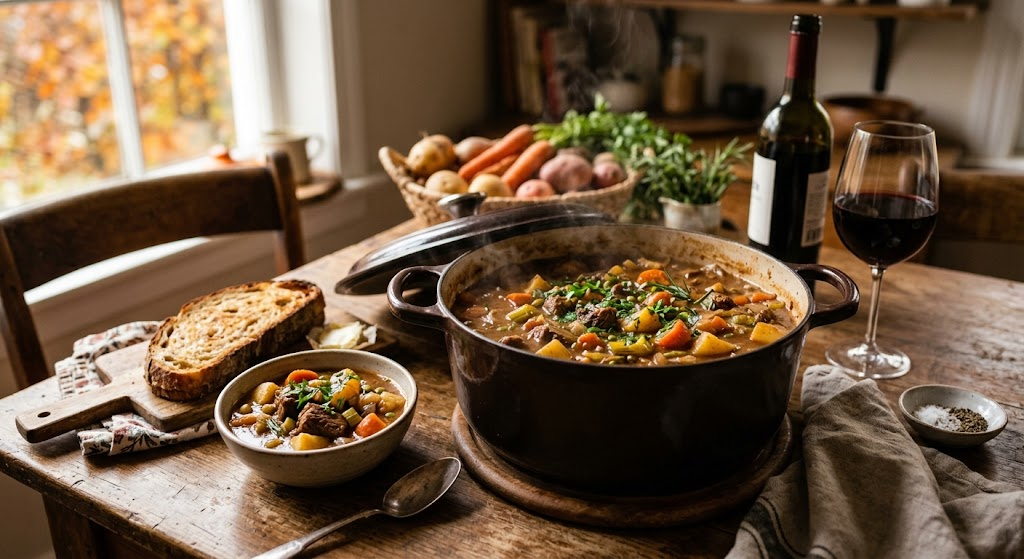

When the chilly weather rolls in, nothing brings comfort quite like a warm bowl of hearty stews. The rich aromas filling the kitchen make everyone feel instant comfort and joy. Cooking a slow meal brings family and friends together around the dinner table. In this comprehensive guide, we explore why stews food and liquor pair so well together. You will also learn about classic recipes, regional variations, and fun brand names that share this famous word. Whether you want quick dinner ideas or slow-cooked magic, we have you covered with simple, tasty tips.
Quick Facts & Overview Table
| Category | Details & Overview |
| Primary Dish Type | One-pot slow-cooked comfort meal |
| Popular Seasons | Fall, Winter, and Chilly Evenings |
| Key Cooking Methods | Braising, Simmering, Pressure Cooking, Slow Cooking |
| Common Base Ingredients | Meats, Root Vegetables, Broth, Aromatics, Herbs |
| Famous Regional Styles | Mexican Stews, Korean Stews, French Ragout, Irish Stew |
| Popular Flavor Pairings | Red Wine, Crusty Bread, Rice, Craft Beer |
What Are Stews and Why Do We Love Them?
Classic stews are delicious meals made by simmering solid ingredients in liquid over low heat for a long time. Unlike quick soups, these rich dishes feature larger cuts of meat, thick root vegetables, and deep savory gravies. People all around the world love cooking hearty stews because they are budget-friendly, easy to prepare, and feed large families with ease. The slow cooking process breaks down tough cuts of meat, making them tender, juicy, and packed with full flavor.
┌────────────────────────┐
│ Select Tough Cuts │
│ & Root Vegetables │
└───────────┬────────────┘
│
▼
┌────────────────────────┐
│ Sear & Brown for │
│ Deep Flavor │
└───────────┬────────────┘
│
▼
┌────────────────────────┐
│ Slow Simmer in Broth │
│ (Tenderizes & Thickens)│
└───────────┬────────────┘
│
▼
┌────────────────────────┐
│ Rich, Flavorful Meal │
└────────────────────────┘
The History and Tradition of The Stews We Enjoy Today
Food historians believe the stews we make today are among the oldest cooked meals in human history. Long before modern ovens existed, ancient cultures placed meat, wild herbs, and vegetables into clay pots over open fires. This simple method allowed tough food to become easy to digest and deeply satisfying. Over centuries, every continent developed its own unique take on slow-cooked meals. Today, these traditions carry on in home kitchens worldwide, bringing warmth and timeless heritage to our dinner tables.
Comforting Fall Soups and Stews for Chilly Evenings
When autumn leaves begin to turn brown, our cravings shift toward comforting fall soups and stews. Autumn produce like pumpkins, butternut squash, carrots, and sweet potatoes make wonderful additions to the pot. Combining tender beef or chicken with fresh seasonal vegetables creates a wholesome meal that warms you up from the inside out. Serving these cozy bowls with warm, crusty bread makes a quick weeknight dinner feel special and complete.
Rich Winter Soups and Stews to Keep You Warm
During the coldest months of the year, nothing beats thick winter soups and stews bubbling on the stove. These heavy dishes often feature root vegetables, beef shanks, dark leafy greens, and rich gravy bases. The long simmering time fills your whole house with wonderful smells while keeping the kitchen warm. Preparing huge batches of hearty stews on Sunday gives you quick, comforting lunches and dinners all week long.
Exploring Spicy and Flavorful Mexican Stews
If you love bold spices and rich colors, traditional Mexican stews will instantly capture your heart. Famous options like Birria and Pozole combine tender meats with dried chili peppers, garlic, cumin, and fresh cilantro. Cooking these dishes slowly allows the savory meats to absorb every bit of rich spice. Serving these flavorful bowls alongside warm corn tortillas, lime wedges, and sliced radishes creates an unforgettable feast for family gatherings.
Rich and Savory Korean Stews for Every Spice Lover
Asian cuisine offers incredible variety, especially when exploring traditional Korean stews known locally as Jjigae. Popular versions like Kimchi Jjigae or Sundubu Jjigae feature fermented kimchi, soft tofu, garlic, and hot pepper paste. These bubbling red pots are served pipe-hot alongside fluffy steamed rice. The combination of spicy broth, savory meat, and fermented flavor makes Korean stews uniquely delicious and deeply satisfying on chilly days.
Perfect Pairings: Stews Food and Liquor Combinations
Enjoying great stews food and liquor combinations elevates a simple home dinner into a restaurant-quality experience. Rich beef pots pair wonderfully with deep red wines like Cabernet Sauvignon or dark stout beers. Lighter chicken or seafood dishes go best with crisp white wines or lager beers. The rich acids in these beverages cut through the heavy gravy, balancing every single bite and making your dining experience truly delightful.
The Fun Side of Food: Stews Cookie Milk and Sweets
Beyond savory dinners, the name also appears in fun desert spots like stews cookie milk shop concepts. These sweet bakery places serve warm, fresh-baked cookies paired with ice-cold flavored milk. Enjoying a hot cookie dipped in sweet milk brings back fond childhood memories for many people. It proves that whether savory or sweet, the idea behind stews is always focused on ultimate comfort and joy.
Beyond the Kitchen: Understanding Stews Tire and Local Businesses
Sometimes people search for the term while looking for local automotive repair centers like a stews tire shop. Auto service centers often share family names with classic food spots in small towns across the country. Finding reliable mechanical service for your vehicle ensures your car stays safe during cold winter drives. It is always great to support local small businesses, whether they fix your tires or serve you dinner.
Top Secret Tips to Make Your Stews Taste Better
Making incredible, restaurant-quality stews food at home requires just a few simple kitchen tricks. First, always sear your meat in a hot pan before adding any liquid to lock in juices. Second, let the pot simmer on low heat rather than boiling hard so the meat stays soft. Finally, add fresh herbs like rosemary or thyme near the end of cooking to keep the flavors bright and fresh.
Conclusion: Bring Home Warmth Today
Preparing hearty stews is one of the most rewarding ways to cook for the people you love. Whether you try spicy Mexican stews, rich Korean stews, or cozy fall soups and stews, these meals warm the heart. Gather your ingredients, take your time, and enjoy the magical process of slow cooking. Try making a hot pot tonight and share your favorite recipe with friends!
Frequently Asked Questions (FAQs)
Q1: What is the main difference between soups and stews?
A: Soups contain more liquid broth with smaller ingredients, while stews use minimal liquid to create thick gravies around large chunks of meat and vegetables.
Q2: Which cuts of meat work best for long slow cooking?
A: Tougher cuts with rich connective tissue, such as beef chuck roast, pork shoulder, or lamb shank, work best because slow cooking makes them extremely tender.
Q3: How can I naturally thicken my gravies without adding extra flour?
A: You can simmer the pot uncovered, mash some cooked potatoes into the liquid, or let root vegetables break down naturally during the slow cooking process.
Q4: Can I freeze leftovers for quick weeknight meals later?
A: Yes, most slow-cooked dishes freeze exceptionally well for up to three months. Store them in airtight containers once they cool down completely.
Q5: Why do these dishes taste even better the next day?
A: As the meal cools in the fridge overnight, the herbs, spices, liquids, and savory meats continue to blend together, deepening the overall flavor profile.
Q6: What are the best sides to serve with thick gravies?
A: Crusty French bread, fluffy mashed potatoes, steamed white rice, and egg noodles are classic choices for soaking up every drop of tasty sauce.