
Quick answer: A good My Hero Academia quirk has four parts: one clear power, a physical drawback, a creative use and a growth path. Pick one of the three canon types (Emitter, Transformation or Mutant), set a power level, then add a pun-style hero name. A free MHA quirk generator can roll all of these in seconds.
What Is a Quirk in My Hero Academia?
In My Hero Academia (Boku no Hero Academia), a quirk is a superhuman ability that appears in early childhood. About 80 percent of the world’s population has one, and the power usually shows up by age four. The remaining 20 percent are quirkless, which is exactly where Izuku “Deku” Midoriya starts the story. A doctor tells him he is quirkless after noticing he has two joints in his toes, a detail the series uses as a rule of thumb.
The franchise is a global hit. Kohei Horikoshi’s manga ran in Shueisha’s Weekly Shonen Jump from July 2014 to August 2024. It finished with 430 chapters in 42 collected volumes and passed 100 million copies in circulation in April 2024. Studio Bones adapted it as an anime that began in 2016 and ended its final season in December 2025, with VIZ Media publishing the manga in English. That long run is why new fans, writers and roleplayers keep building original characters (OCs) in this world.
The Three Quirk Types: Emitter, Transformation and Mutant
The series sorts quirks into three broad types. Knowing the type tells you how the power works and what limits it.
| Type | How it works | Canon example | Typical limit |
| Emitter | Releases or controls something outside the body | Katsuki Bakugo’s Explosion (sweat that explodes) | Strain on the user’s body, stamina or aim |
| Transformation | Changes the body for a limited time | Eijiro Kirishima’s Hardening | Duration and fatigue |
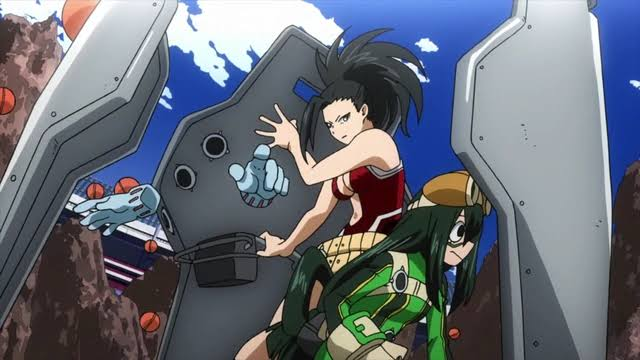
| Mutant | The body is permanently altered, often with animal traits | Tsuyu Asui’s Frog | Physical traits bring weaknesses |
Start with the type because it shapes everything else. An Emitter OC needs a clear range and source. A Transformation OC needs a timer. A Mutant OC needs a trade-off built into their body.
The 4-Part Formula Behind a Believable Quirk
The best quirks in the series are easy to explain in one sentence and have a clear cost. Use this structure for any OC.
- One clear power. Aizawa’s Erasure cancels another person’s quirk while he looks at them.
- A physical drawback. Aizawa’s eyes dry out, so he cannot keep Erasure active for long.
- A creative use. Good users bend a simple power into new tricks, like Deku using small, controlled bursts.
- A growth path. The power gets stronger, or the user learns to protect their body.
Here is how that looks with the drawbacks from canon:
| Character | Quirk | Drawback |
| Yuga Aoyama | Navel Laser | Firing for more than one second causes a stomachache |
| Ochaco Uraraka | Zero Gravity | Using it past her limit makes her nauseous |
| Minoru Mineta | Pop Off | Pulling off too many orbs makes his scalp bleed |
| Shoto Todoroki | Half-Cold Half-Hot | Overusing ice chills his body and fire overheats it |
Rule of thumb: if you cannot say what your quirk costs, it is too strong.
How to Use an MHA Quirk Generator Step by Step
A generator removes blank-page stress and gives you a structured starting point. With the GujoAnimes random MHA quirk generator with drawback and hero name, the process looks like this:
- Choose a side: hero, villain or vigilante.
- Pick a quirk type or leave it random.
- Set the power level. Support quirks suit side characters. Top-10 quirks suit a main OC.
- Generate and read the drawback first.
- Re-roll only the hero name if you like the quirk but not the title.
Each result includes a quirk name, type, effect, drawback, hero or villain name and a costume idea. One example roll is Static Bloom, an Emitter that grows flowers of electricity that shock on touch. Another is Ironbark, a Transformation where the skin hardens into wood armour but the joints cannot fully bend.
The tool is free and needs no sign-up, and every quirk is original rather than copied from the anime.
Three Worked Examples (Original Quirks)
These are original ideas made with the four-part formula. Treat them as templates.
1. Tideline (Transformation)
- Power: the legs turn into flowing water for up to ten minutes.
- Drawback: the user dehydrates fast and must drink afterwards.
- Creative use: slips under doors and through drains.
- Growth path: learns to spread the water into a thin sheet on the ground.
2. Lantern Moth (Mutant)
- Power: moth wings and antennae that sense heat and light from far away.
- Drawback: bright flashes stun the user.
- Creative use: tracks fires and trapped people in smoke.
- Growth path: learns to tune out sudden light.
3. Quiet Ledger (Emitter)
- Power: absorbs the sound of one room into a stored “tab”.
- Drawback: the stored sound plays back at once when released, deafening the user for a moment.
- Creative use: silent stealth, or a sonic burst.
- Growth path: learns to release sound in a narrow beam.
How to Pick a Hero Name
In the series, students pick hero names themselves, and the best are short, memorable and tied to the quirk. Look at how canon does it:
- Uravity is Ochaco Uraraka’s name plus gravity, a portmanteau.
- Froppy is Tsuyu Asui’s frog plus a playful ending.
- Red Riot reflects Kirishima’s red hair and rowdy spirit.
- Eraser Head states Aizawa’s power directly.
A fast method is to mix two images (power plus feeling), shorten it, then say it aloud. If you can shout it in one breath, it works. Villain names lean darker and vigilante names lean toward street style. Also give your OC a civilian name. Japanese names with meaningful kanji, such as 森野 Morino (“forest field”) for a plant quirk, quietly reinforce the power.
Common Mistakes to Avoid
- Making the quirk too strong. Without a cost, there is no tension.
- Copying One For All. Fans tend to dislike OCs that steal the main plot.
- Ignoring family. Quirks often blend both parents’ traits. Todoroki’s mix of fire and ice comes from his parents Endeavor and Rei, who were joined in a “quirk marriage” to produce a stronger child.
- Skipping a goal. Give your OC a rank to reach, a rival or a debt.
Beyond Fanfiction: Where to Use Your Quirk
Quirks translate well outside the anime. Writers use them for fanfiction and original superhero stories. Roleplayers use them on Discord and forums. Tabletop players adapt them as homebrew powers for Dungeons & Dragons. Artists use the drawback and costume idea as a character sheet. If you are still deciding what fits you, the Which MHA character are you quiz can help you pick a personality first.
Frequently Asked Questions
What is an MHA quirk generator?
It is a free online tool that creates a random My Hero Academia-style quirk with a type, effect, drawback and hero name for an OC.
What are the three quirk types in My Hero Academia?
Emitter, Transformation and Mutant. Emitters release or control something outside the body, Transformations change the body temporarily, and Mutants are permanently changed.
What percentage of people have quirks in My Hero Academia?
About 80 percent. The rest are quirkless, like Izuku Midoriya before he inherits One For All.
How do I make a quirk balanced?
Give it one clear power, a physical drawback, a creative use and a growth path. If the cost is unclear, weaken the power.
Can I create a villain or vigilante quirk?
Yes. Choose villain or vigilante mode for darker quirks and street-style names.
Are generated quirks official?
No. They are original fan creations. My Hero Academia belongs to Kohei Horikoshi and Shueisha.
Final Thoughts
A memorable quirk is simple, costly and creative. Choose a type, define the limit, build a use and name your hero with a pun or portmanteau. When you want a quick start, roll a character with the MHA quirk generator and adjust the result until it feels like yours. For background on the series, see My Hero Academia on Wikipedia.
Fan content. My Hero Academia is by Kohei Horikoshi.